

How does a 50 W LED street light compare to a 40 W one in terms of energy consumption?
Aug 13, 2025
In the realm of modern urban illumination, LED street lights have emerged as the go - to solution for their energy - efficiency, long lifespan, and superior lighting quality. As a supplier of 50 W LED street lights, I often encounter inquiries regarding the comparison between 50 W and 40 W LED street lights, especially in terms of energy consumption. This blog aims to delve into this topic comprehensively, providing valuable insights for potential buyers.
Understanding Energy Consumption Basics
Before we directly compare the 50 W and 40 W LED street lights, it's essential to understand the fundamental concept of energy consumption. Energy consumption is typically measured in kilowatt - hours (kWh). The formula to calculate energy consumption is straightforward: Energy (kWh)=Power (kW)×Time (h).
For instance, if a 50 W (or 0.05 kW) LED street light operates for 10 hours a day, the daily energy consumption would be 0.05 kW×10 h = 0.5 kWh. Similarly, a 40 W (or 0.04 kW) LED street light running for the same 10 - hour period would consume 0.04 kW×10 h = 0.4 kWh per day.
Daily and Annual Energy Consumption Comparison
Let's assume a standard operating time of 12 hours per day for street lights, which is a common duration in many urban and suburban areas.
For a 50 W LED street light:
The daily energy consumption is 0.05 kW×12 h = 0.6 kWh.
In a year (assuming 365 days), the annual energy consumption amounts to 0.6 kWh×365 = 219 kWh.
For a 40 W LED street light:
The daily energy consumption is 0.04 kW×12 h = 0.48 kWh.
The annual energy consumption is 0.48 kWh×365 = 175.2 kWh.
The difference in annual energy consumption between the 50 W and 40 W LED street lights is 219 kWh - 175.2 kWh = 43.8 kWh.
Cost Implications of Energy Consumption
Energy consumption directly translates into cost. The cost of electricity varies from region to region, but for the sake of illustration, let's assume an average electricity cost of $0.15 per kWh.
For the 50 W LED street light, the annual electricity cost is 219 kWh×$0.15 = $32.85.
For the 40 W LED street light, the annual electricity cost is 175.2 kWh×$0.15 = $26.28.
The annual cost difference is $32.85 - $26.28 = $6.57. While this might seem like a small amount for a single street light, in large - scale street lighting projects, the cumulative savings can be substantial. For example, if a municipality is installing 1000 street lights, the annual cost difference would be $6.57×1000 = $6570.
Lighting Performance and Energy Trade - off
However, energy consumption is not the only factor to consider. Lighting performance is equally crucial. A 50 W LED street light generally provides higher luminous flux (measured in lumens) compared to a 40 W one. Higher luminous flux means brighter illumination, which can enhance visibility and safety on the streets.
In areas with high traffic volume, such as main roads and highways, the additional light output from a 50 W LED street light might be necessary to ensure clear visibility for drivers and pedestrians. On the other hand, in less - trafficked areas like residential alleys or small side streets, a 40 W LED street light may provide sufficient illumination at a lower energy cost.
Our 50 W LED Street Lights: A Value Proposition
As a supplier of 50 W LED street lights, I can attest to the value they offer. Our J - 6022 LED STREET LIGHT is designed with the latest LED technology, ensuring not only high luminous efficacy but also energy - efficient operation. Despite its 50 W power rating, it is engineered to provide optimal lighting while minimizing energy waste.
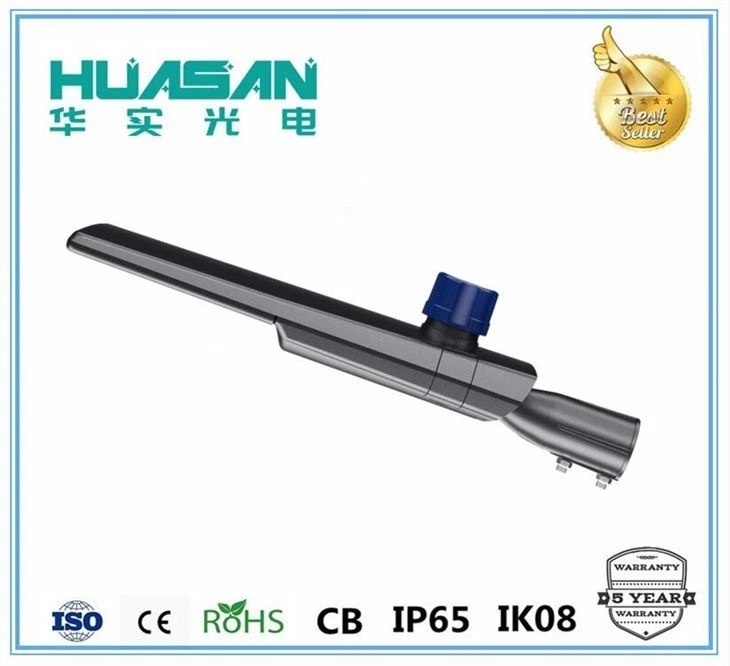
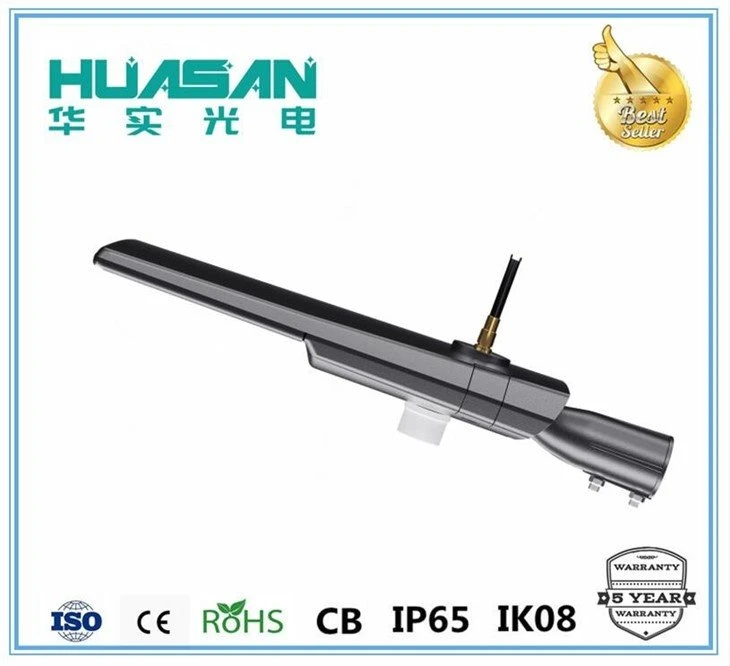
The J - 6033 LED STREET LIGHT is another product in our portfolio. Although it is a 60 W light, it shares many of the advanced features that make our 50 W lights stand out. These features include high - quality LED chips, efficient heat dissipation systems, and intelligent control options that can further reduce energy consumption when appropriate.
Considering the Bigger Picture
When choosing between a 50 W and a 40 W LED street light, it's important to consider the broader context. In addition to energy consumption and lighting performance, factors such as the initial cost of the lights, maintenance requirements, and environmental impact should also be taken into account.
Our LED street lights, including both 50 W and 40 W models, are built to last. They have a long lifespan, which reduces the frequency of replacements and thus lowers the overall maintenance cost. Moreover, LED technology is more environmentally friendly compared to traditional lighting sources, as it contains no hazardous materials like mercury and has a lower carbon footprint.
Making the Right Choice
The decision between a 50 W and a 40 W LED street light ultimately depends on the specific requirements of the lighting project. If high - level illumination is a priority, especially in areas where safety and visibility are of utmost importance, a 50 W LED street light might be the better choice. However, if energy cost savings are the primary concern and sufficient lighting can be achieved with lower luminous flux, a 40 W LED street light could be more suitable.
Contact Us for Your Lighting Needs
Whether you are a municipality looking to upgrade your street lighting system, a developer working on a new housing project, or an organization responsible for lighting a large industrial area, we are here to assist you. Our team of experts can provide in - depth consultations and help you select the most appropriate LED Streetlights for your specific needs. If you are interested in learning more about our 50 W LED street lights or comparing them further with 40 W options, please don't hesitate to reach out. We look forward to discussing your project and finding the best lighting solutions together.
References
- "LED Lighting Handbook" by Lighting Research Center.
- Industry reports on LED street lighting technology and energy efficiency.